How to track overdue construction tasks
Track overdue construction tasks by reviewing each missed due date with five facts: who is responsible, what is blocking progress, how important the work is, what must happen next, and whether the date still reflects the current plan. The aim is not to make a red list longer; it is to turn late work into a visible decision.
Daily overdue-task triage
-
Confirm the task is still required
Close duplicates and cancel work that the project no longer needs. An inflated overdue list trains the team to ignore the list.
-
Check the responsible people
Name the people expected to act. If responsibility changed, update the assignees rather than forwarding a screenshot of the old task.
-
Record the blocker
Use blocked when work cannot continue and write the concrete reason: missing access, material, decision, preceding work or available labor.
-
Set the next action
A blocker needs an action and a person who can move it. “Waiting” describes a condition; it does not tell the team what happens next.
-
Review priority and sequence
A late low-impact task may stay behind today's critical preparation. Use project impact, not the age of the notification alone, to order the response.
-
Change the due date honestly
Move the date when the plan has genuinely changed and record why in the task discussion. Repeatedly rolling every overdue task to tomorrow erases the signal.
The weekly review
Group overdue work by project, responsible person and blocker type. The review should answer:
- Which tasks affect work starting in the next planning window?
- Which blockers require a manager, designer, supplier or another trade?
- Is one person carrying more urgent work than can realistically finish?
- Which tasks keep changing dates without a changed scope or sequence?
- Which completed items still need a separate project process outside the task itself?
Keep the review short by resolving obvious corrections before the meeting. Use meeting time for decisions and cross-team dependencies, not reading every row aloud.
Do not hide delay by resetting dates
A due date is useful because it records the current commitment. If every missed date is silently replaced, the list looks healthy while the work remains late. When a legitimate change occurs, update the date and add the reason. When nothing changed, keep the missed date visible and set the next action in the discussion.
For the surrounding planning process, connect this review to your crew schedule and the broader construction task workflow.
Doing this in TerenIQ
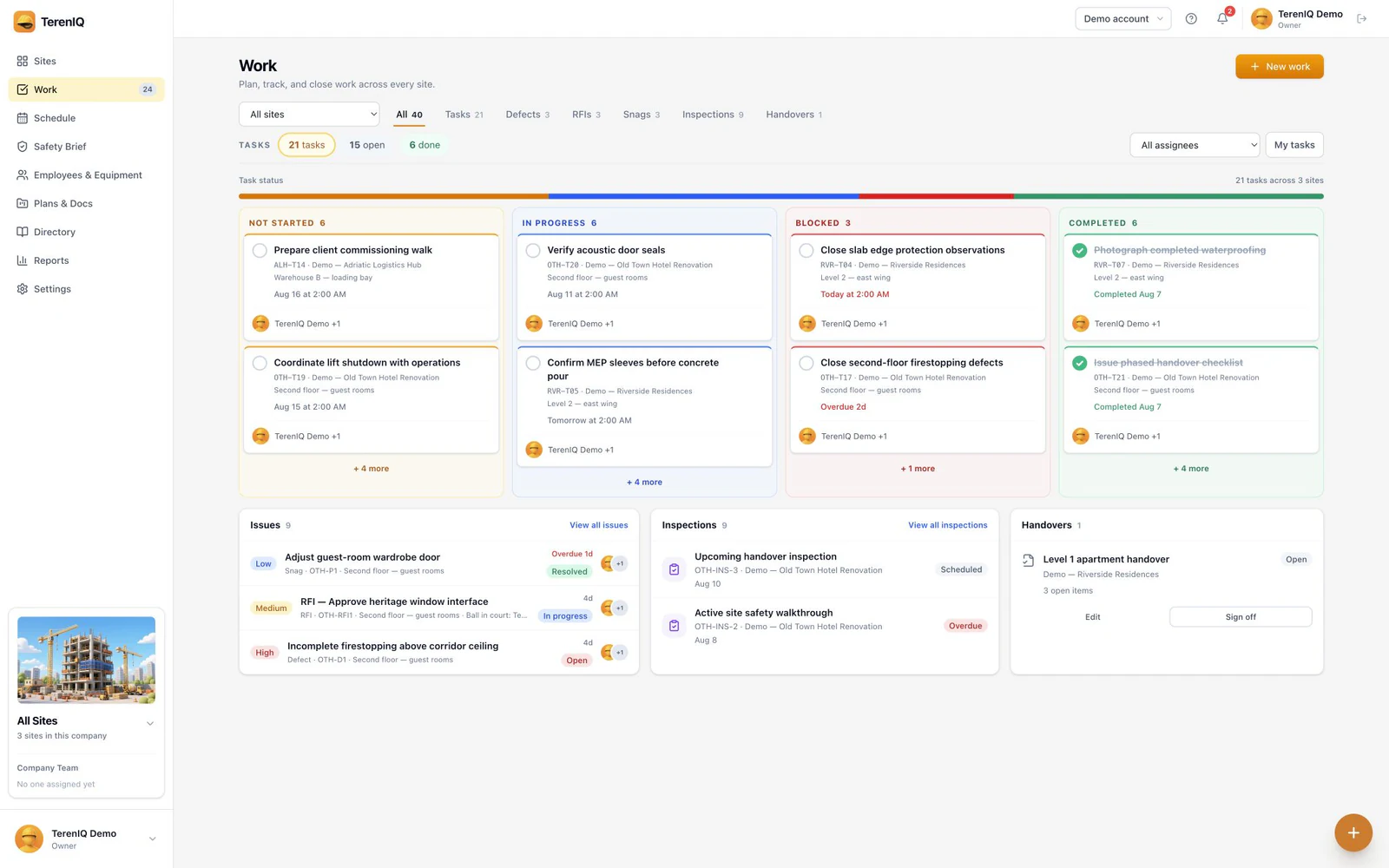
TerenIQ gives each task the fields needed for an overdue review:
- One or more assignees, priority, optional start and due times, and the current task state.
- A blocked state plus comments for the reason, decision and next action.
- Site and drawing context so the team is reviewing the same physical work.
- Assignment and status notifications when responsibility or progress changes.
Frequently asked questions
When is a construction task overdue?
It is overdue when its due time has passed and the required outcome is not completed. A blocked task can also be overdue; the blocker explains the state but does not remove the missed date.
Should overdue task dates be moved forward?
Only when the plan genuinely changes. Record the reason for the new date. Moving every late task to tomorrow hides the original commitment without resolving the work.
Who should review overdue site tasks?
Foremen can resolve crew-level status and assignment issues daily. Site or project managers should review cross-team blockers, high-impact delay and workload conflicts.